Know the material. Know the process. Know what you're buying.
Pratima's textile knowledge lives in the workshops we work with across India. This page is about one of them, a Kashmiri textile house behind the current range, as a real example of how we think about material honesty, not as the whole of it.
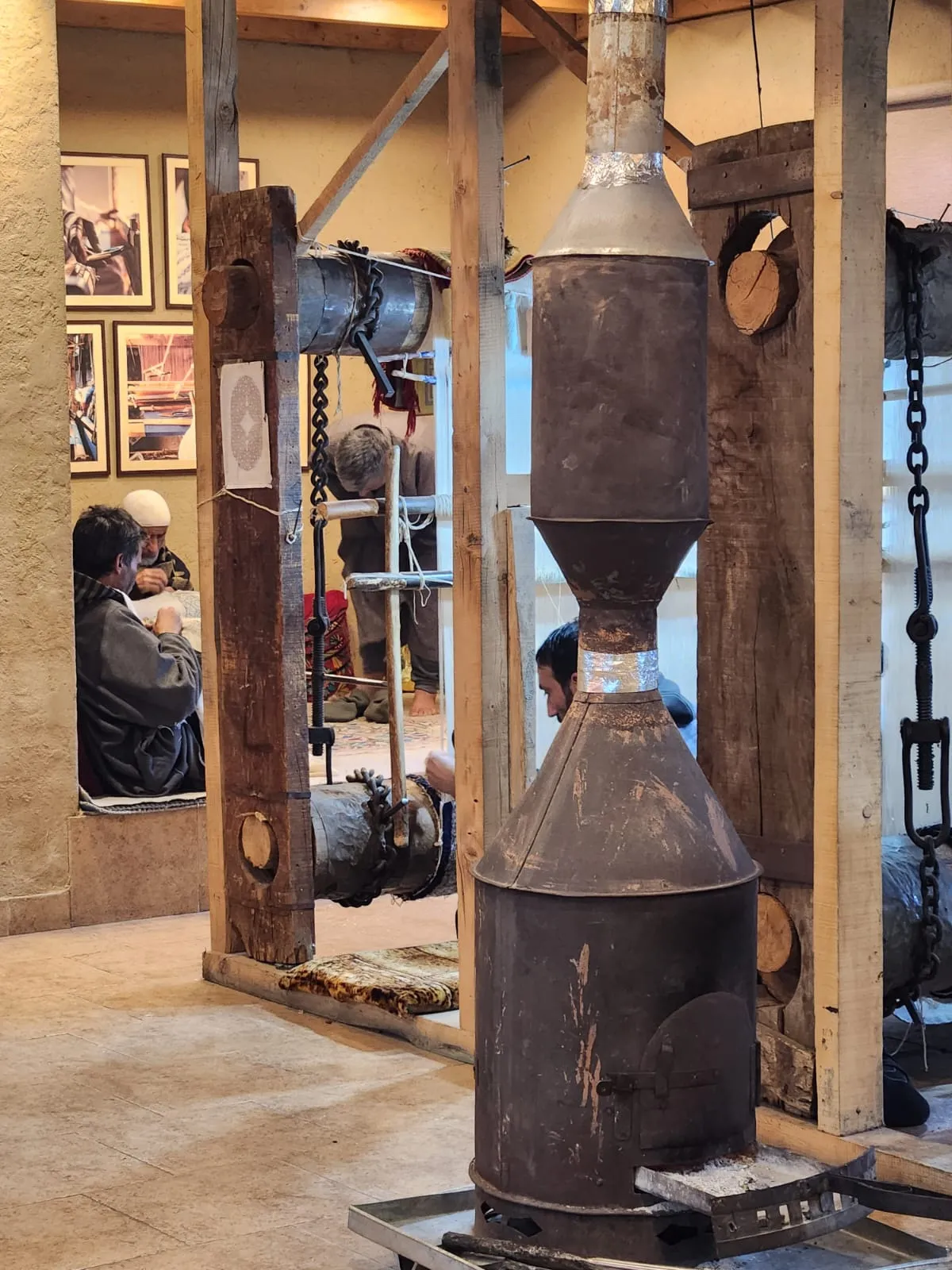
The fibre travels.
The skill does not.
Kashmir's edge isn't in raising animals. It's that spinning, weaving and finishing have been practised in the same streets for generations, and the knowledge never left.
The workshop we partner with here doesn't breed livestock either. They build fibre relationships with suppliers and pastoral communities directly, and their expertise begins the moment it arrives.
Some of that fibre travels in from outside the valley, true of nearly all luxury cloth and rarely stated. We'd rather note it next to the fibre and let a buyer weigh what it's worth for themselves.
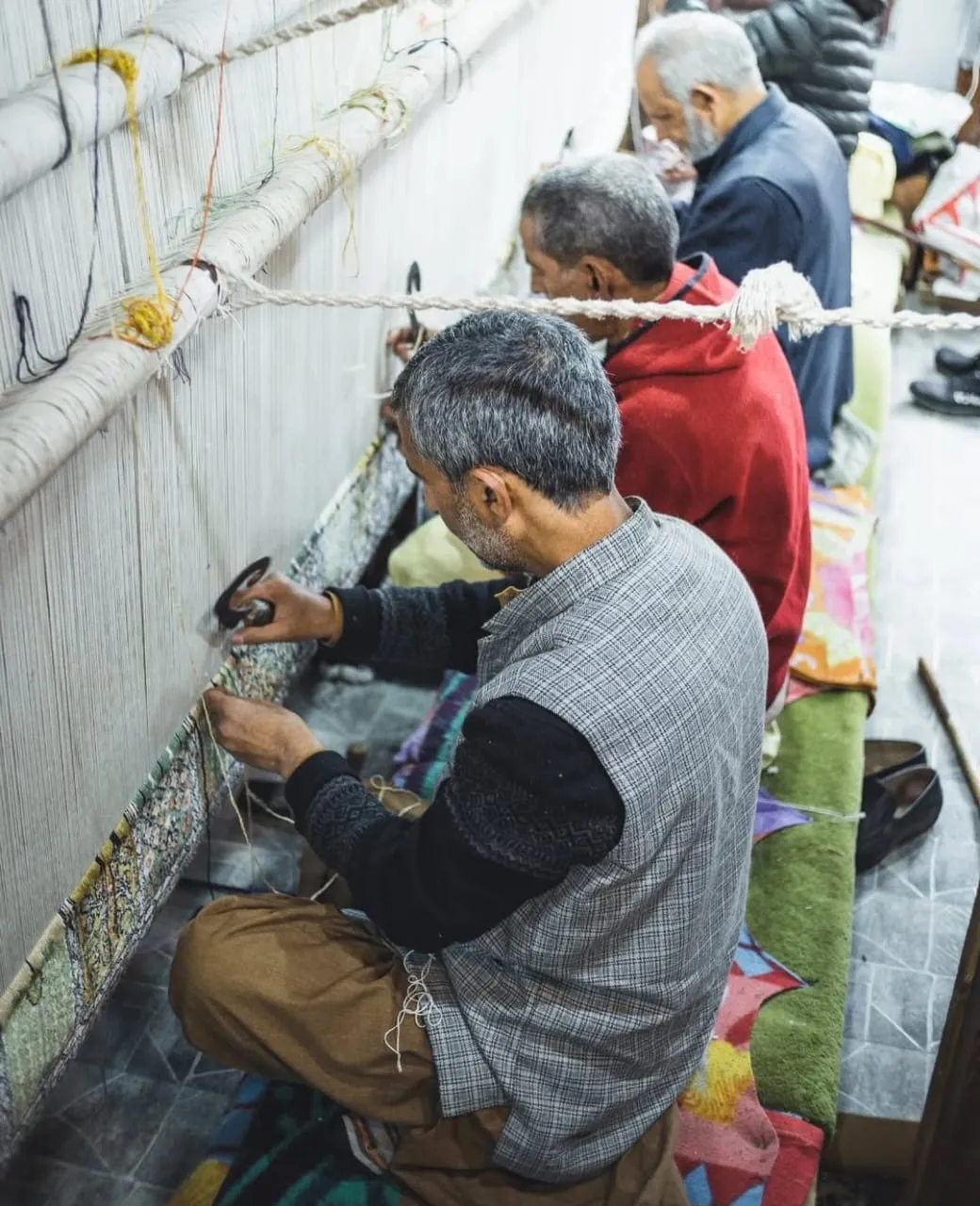
Four generations. Eighty-plus handlooms. A family that has done nothing else.
One of the Kashmiri workshops in Pratima's network. By the family's own account it was registered in around 1860, with the weaving practice reaching back further still. The fourth generation runs it today, both sides of the family drawn from the same trade.
More than eighty handlooms operate alongside their power looms, which is why this single workshop can produce both machine-woven consistency and hand-woven heritage, and tell us honestly which piece is which.
Their cloth has moved through premium hotel retail in India for decades, including groups such as Oberoi and Taj, buyers with no patience for excuses.
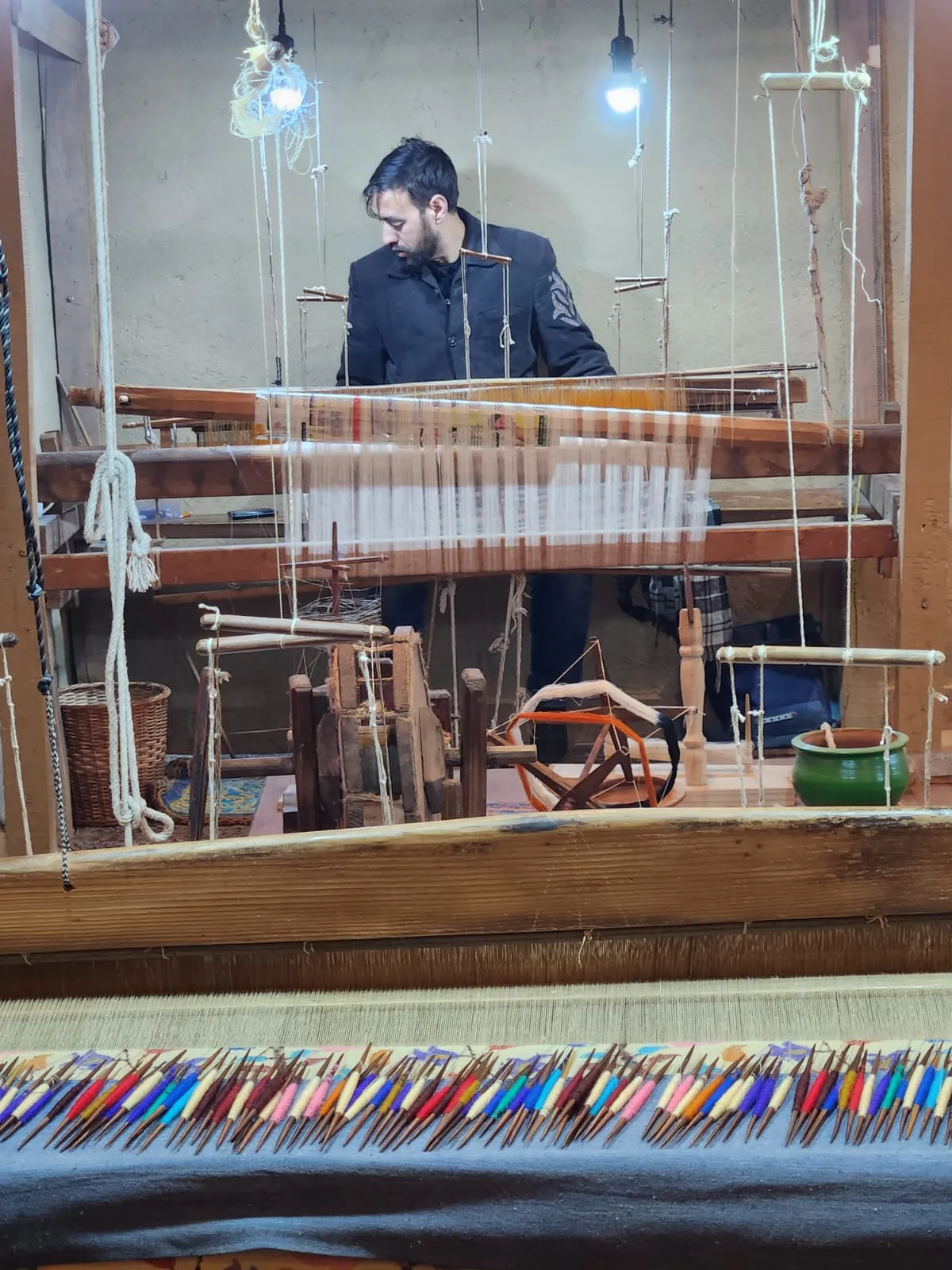
We didn't choose this workshop for its history. We chose it because every question got answered with a number, and we were able to watch a full production run rather than a single sample.
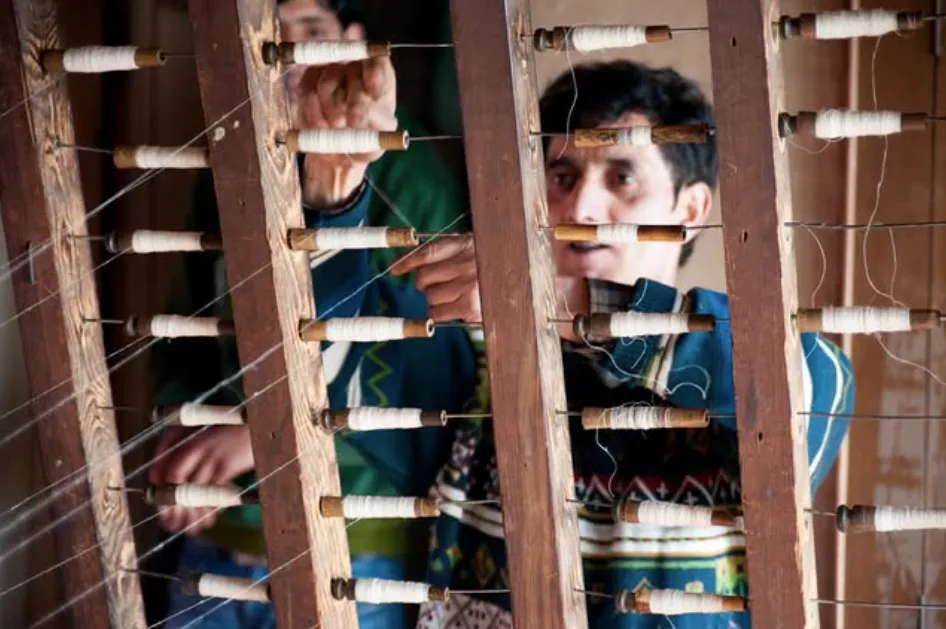
A power loom isn't a lesser loom: it's a different promise, and we'll always tell you which one you're getting.
Everyday through Fashion come off these: even, repeatable cloth at commercial quantity, the same width, weight and hand this season and the next. Exactly what a shop reordering in March needs, and something a handloom can't promise.
More than eighty of them, and Heritage comes off these alone. One weaver, one loom, one piece at a time, each slightly its own. Slower by nature, and limited by how much hand-spun yarn exists to work with.
Before either loom: fibre sorted and graded by hand, yarn prepared, thousands of warp ends wound and tensioned. After both: washed and pressed by whatever method the cloth calls for, then checked twice, once on the loom and once folded.
Other Indian textile regions carry the same kind of knowledge. As Pratima's range grows, this page grows with it.
See the collection